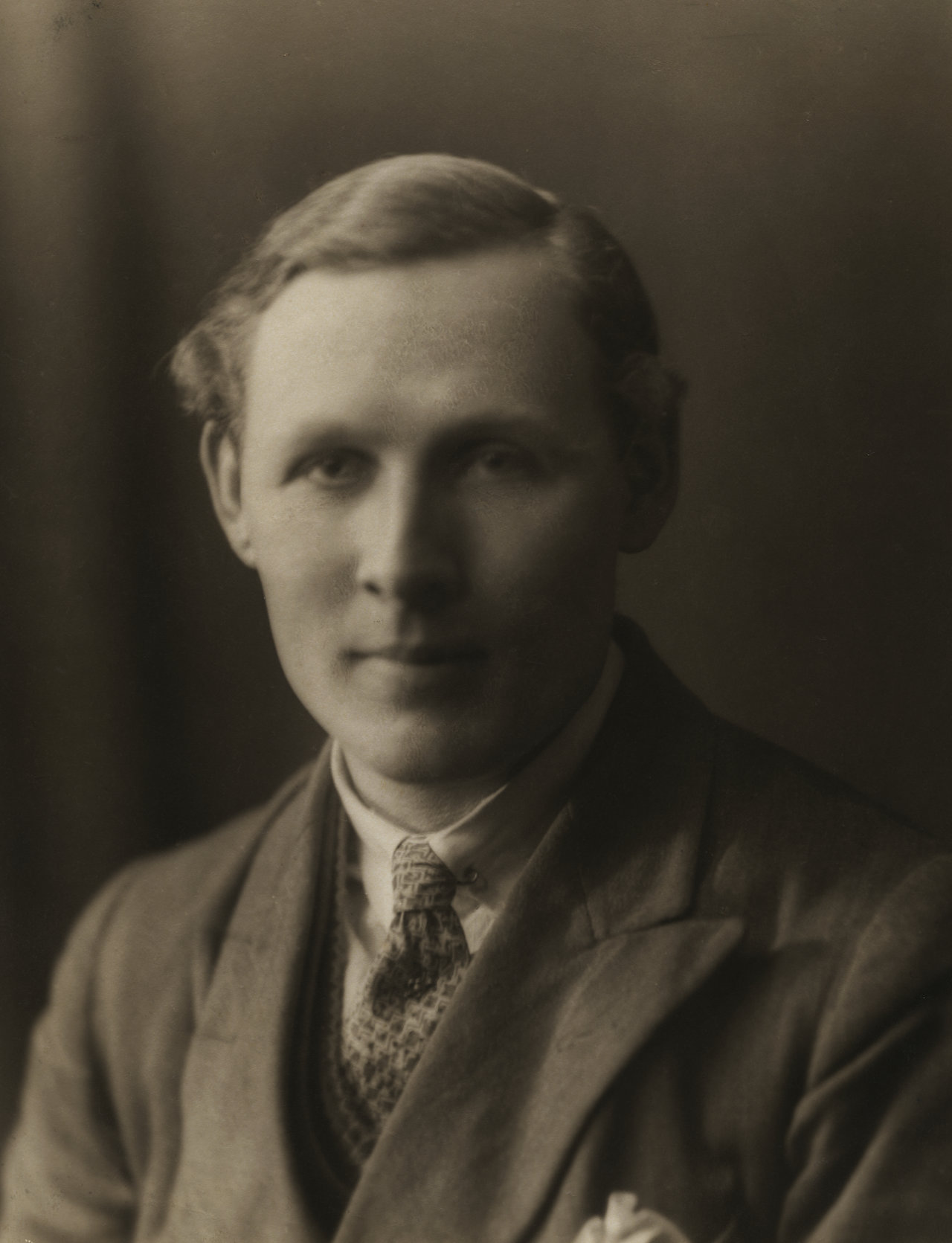
The rather thoughtful, perhaps wistful, young man in the photograph is my paternal grandfather, Edwin. He gazes benignly at the camera, his slightly wavy hair neatly trimmed and parted, clean shaven, a slight smile reminiscent of the Mona Lisa. He wears a jacket, and we can make out a waistcoat plus what appears to be a knitted vee-neck jumper. There’s a handkerchief in the jacket breast pocket, and a neck tie with fancy geometric pattern is neatly knotted over a collar stud.
Edwin was born in 1901. I don’t know when the portrait was taken, but it’s likely some time in the 1920s or early 1930s.
Edwin, or Ted as he was known to family and friends, is a distant figure for me. I was only 10 or 11 years old when he died, which was in the mid-1970s. In his latter years Ted worked as a gardener, and it was doing this job, out in fresh air and among growing things, that he suffered a heart attack and died.
Although we visited our grandparents – on both sides of the family – quite regularly, I’m afraid I only have the haziest of memories of Grandad Ted. All I really knew about him was he liked growing things, worked the large vegetable and fruit garden in the house he shared with Nan, and was a fair artist when he set his mind to it. Perhaps that’s where I get my slight artistic bent from.
After his death, the family set about clearing his things. I think get my hoarding gene from this side of the family, too, judging by the several ramshackle sheds Grandad had set up in his garden and filled with junk.
Hidden away, behind a sideboard, we found his medals. Nothing unusual there. Ted had served in the Royal Air Force, and then the RAF Regiment during the Second World War and its immediate aftermath. There was the Defence Medal, War Medal, 1939–45 Star, and France & Germany Star, meaning he had been sent into Europe after D-Day in 1944.
There was another, a silver medal. It seemed out of place. Although my father had some of the story, this still needed some research. Ted’s rank and service number was inscribed around the edge, which gave a clue. It was an Indian General Service Medal, awarded for service in Waziristan between 1919 and 1921. There was also a bar to the ribbon, for 1921 to 1924, meaning Ted’s regiment had done two tours on the North-West Frontier, in what is now the border country between Pakistan and Afghanistan.
This felt, at the time we began to investigate the history, somewhat poignant. In the early 2000s, British forces had been deployed to the same region, almost a century on.
Grandad had, apparently, joined the British Army soon after the end of the First World War. He was not yet 20 years old. He was assigned to the 2nd Battalion, Queen’s Royal Regiment, West Surreys. According to regimental histories, the 2nd Battalion was sent to India in 1919, to police the North-West Frontier of India, what we know today as Afghanistan and Waziristan.
Under Lieutenant Colonel Mathew-Lannowe, it continued the Regiment’s great reputation for smartness and efficiency, later earning the nickname “The Guards of India” after providing guards and escorts for the Prince of Wales. When it left India in 1926, the Commander-in-Chief, Lord Birdwood, said: “For the past 40 years I have realised there are no better troops than The Queen’s.”
The regimental history says the 1st Battalion served in Ireland – “during ‘the troubles’” – then went to the Far East. After some years in Hong Kong, they went to Quetta in north west India. Edwin’s Battalion apparently went straight to India in 1919. Nan had a Mahjong set and some other oriental trinkets, not the kind of thing English antique shops commonly had, and the assumption has always been that Edwin was in Hong Kong at some point. Perhaps the Battalions were rotated out, or more likely men were swapped between the two. Hong Kong seems a very long way from India for rest tours.
Perhaps we will never know Ted’s movements while serving in the Queen’s. What we do know is he contracted malaria, and was invalided out of the army and sent home.
Nan, who worked in service at various big houses around the Dorking area, always told the story of how she met Ted. She was on the bus, heading to work one morning, and spotted a man standing forlornly by the bus stop. “He looks like he needs someone to look after him,” she thought. They married in the mid-1930s, and had one child, my father, who came along at the start of the Second World War.
Ted, despite having had malaria, enlisted again. This time he joined the Royal Air Force, and then the RAF Regiment. Having his RAF number, the idea was to try and get more information about his RAF service, when he enlisted, where he served and so on, but I believe many of the personnel records were destroyed in a fire.
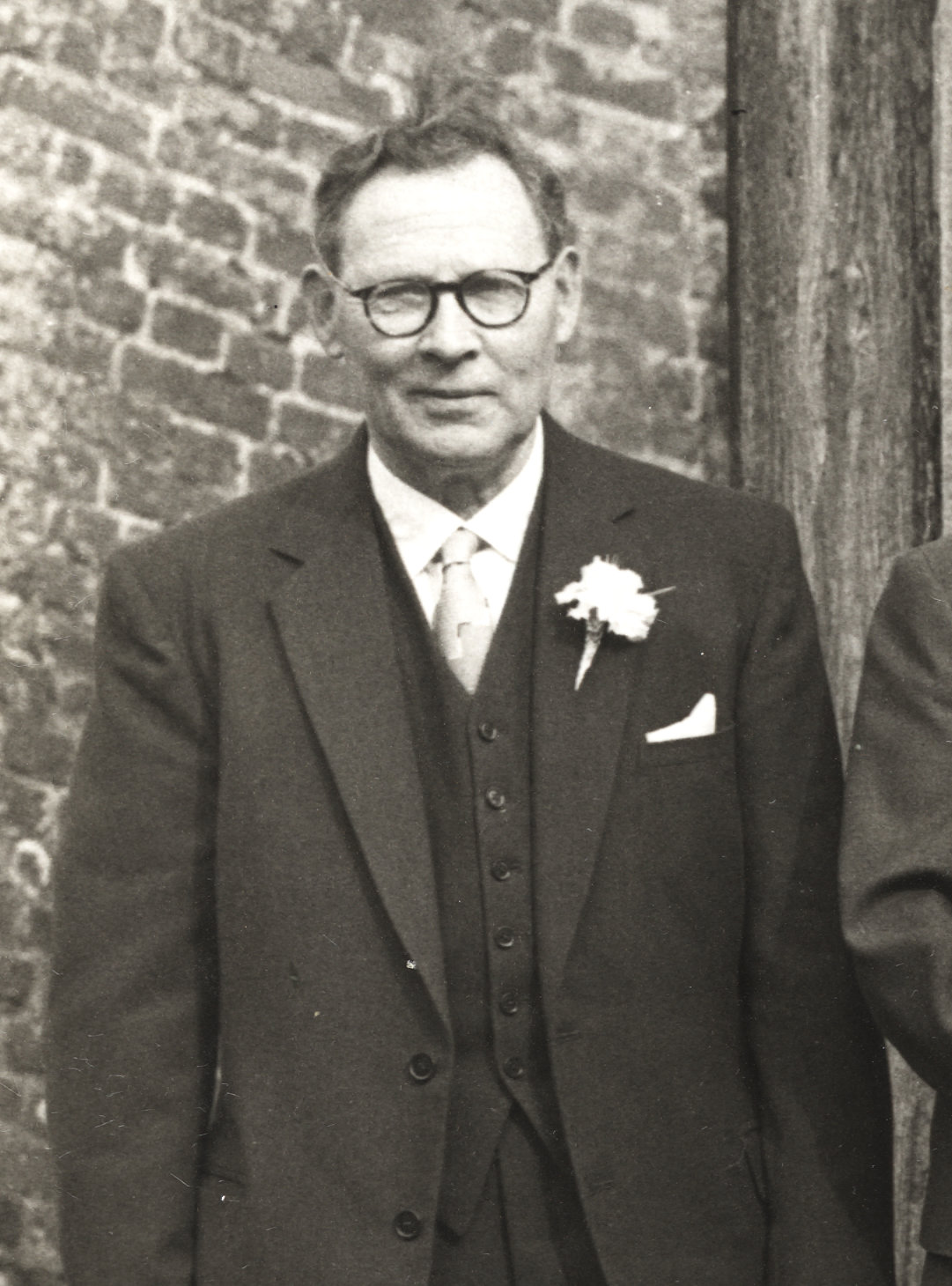
Quite an eventful life, then, for the wistful young man in the photograph. Oh, how I wish I could talk to him about his adventures.